CUSTOM TENT BUYER GUIDE
Heating and Cooling a Commercial Tent: Questions to Plan Before Installation
Plan heating and cooling for a commercial tent by reviewing occupancy, enclosure, services, ventilation and local specialist responsibilities.
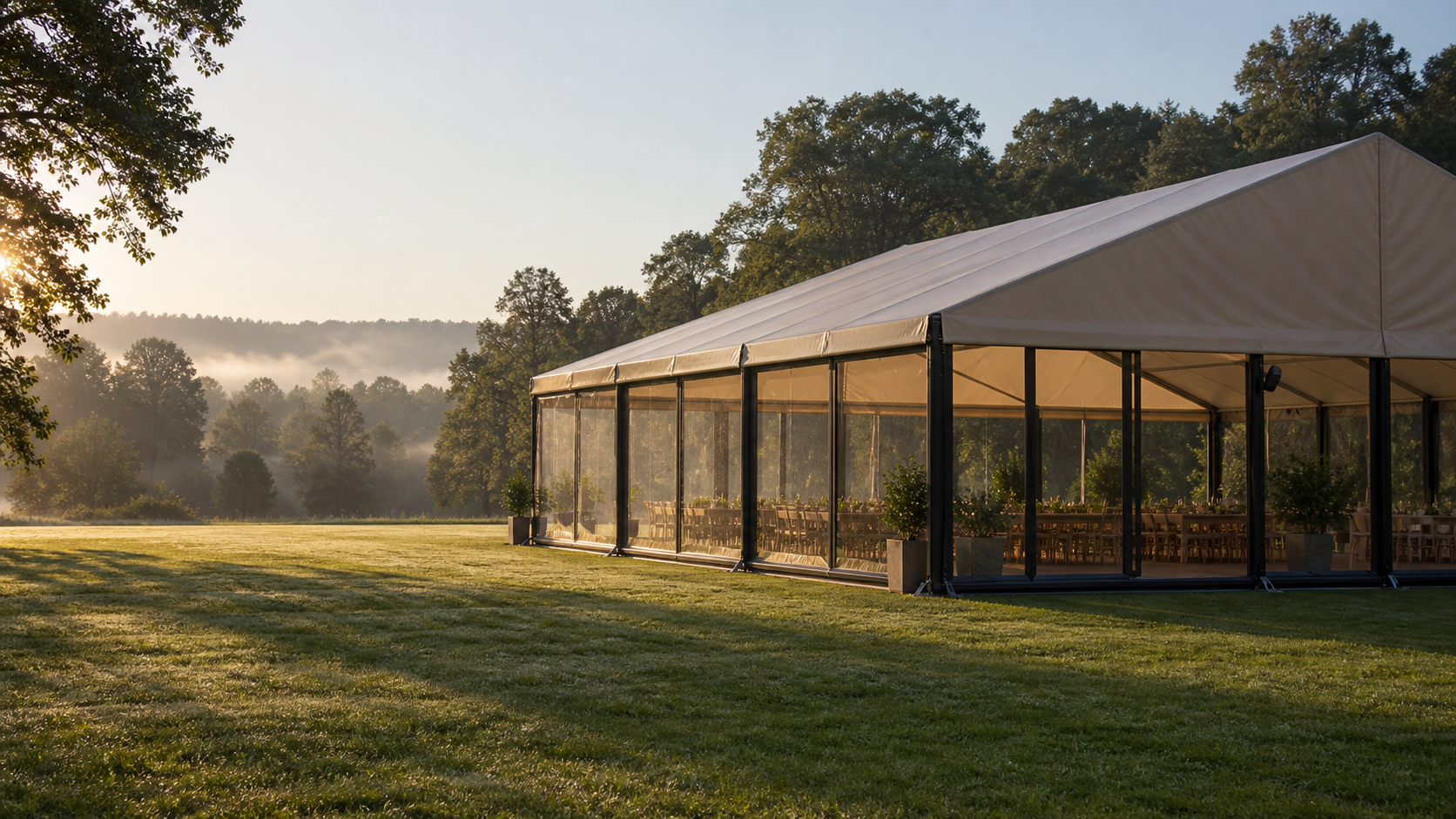
- Introduction
- 1. Define the operating conditions
- 2. Separate tent scope from mechanical services
- 3. Validate in real operating conditions
- Mid-article CTA
- FAQ
Heating and cooling a tent is a project-wide service question. The tent enclosure matters, but so do climate, occupancy, heat sources, doors, ventilation, electrical capacity, equipment placement and local safety requirements. A responsible supplier should discuss the tent-shell inputs without promising a universal indoor result.
1. Define the operating conditions
State the location, season, hours, target use and expected occupancy. Record whether the tent is used for dining, storage, workshop activity, exhibitions or guests waiting in a queue. Each use produces a different heat and moisture profile.
Include how frequently doors open and which sides must stay enclosed. The commercial tent ventilation guide can help identify airflow and moisture inputs before a local HVAC specialist is engaged.
2. Separate tent scope from mechanical services
The tent drawing should identify walls, doors, vents and relevant service interfaces. Heating, cooling, electrical distribution, fuel handling, drainage and equipment clearances require suitable local design, installation and oversight. Assign each party clearly rather than treating “air conditioning” as a generic accessory line.
During installation preparation, confirm where equipment sits, how ducts or cables are routed and how access remains clear. Never position equipment based on a visual estimate alone.
3. Validate in real operating conditions
Factory checks can confirm the tent components supplied. Site commissioning must confirm the combined tent, services and actual operation. Record occupancy, weather, door status and any issues during the first operating period so the responsible team can make informed adjustments.
Mid-article CTA
Planning an enclosed tented space? Send TentDawn the location, season and activity to clarify the tent-shell questions before services are designed.
FAQ
Can a tent manufacturer guarantee indoor temperature?
No. Temperature performance depends on the tent, climate, operation and local mechanical-services design.
What should be decided first?
Define use, occupancy, enclosure, door operation, location and available services before selecting equipment.
Does ventilation still matter with cooling?
Yes. Air movement, moisture and ventilation requirements should be considered as part of the complete site-specific plan.
Conclusion
Comfort planning starts with the operation, then coordinates tent enclosure and local services. Define conditions early and retain clear responsibility boundaries through installation and commissioning.
Final CTA
Discuss an enclosure-ready tent configuration. Contact TentDawn with your project details.
START A PROJECT
Send us the basics.
We will reply with the right next questions for your custom tent requirement.