CUSTOM TENT BUYER GUIDE
Custom Tent Branding and Graphics: Planning a Professional Branded Structure
Plan custom tent branding by artwork, viewing distance, material, production approval, installation and practical operating needs.
- Introduction
- 1. Begin with the viewer and the use case
- 2. Prepare production-ready artwork
- 3. Balance visibility with operation
- Mid-article CTA
- FAQ
Branding can turn a tent from shelter into a visible event or operational asset, but graphics should be planned as part of the product specification. Artwork placement, viewing distance, seams, door movement, panel geometry, lighting and the intended material all influence the final result. A logo file alone is not a complete production brief.
The best branded projects align design and manufacturing before material preparation. This reduces late artwork changes and helps the client approve what will actually be supplied.
1. Begin with the viewer and the use case
Identify where the tent will be seen: roadside, exhibition aisle, sports venue, festival entrance or hospitality area. Consider the viewing distance, main approach direction, day/night use and which surfaces remain visible once doors and walls are in operation. A large logo on the wrong panel may be hidden by a queue, vehicle or open access point.
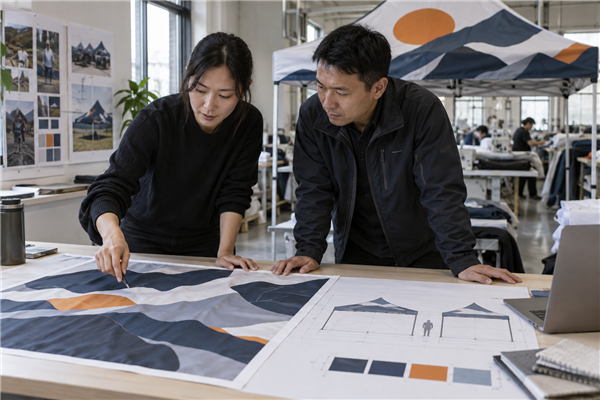
Create a simple elevation or layout showing priorities: brand mark, campaign message, sponsor area, directional information and areas intentionally left clear. Avoid relying on a generic mock-up when the final tent has custom bays, seams and doors.
2. Prepare production-ready artwork
Agree file format, colour references, artwork scale, safe areas and proofing process before production. The production team should know whether graphics are intended for roof fabric, sidewalls, removable panels or banners. Confirm what happens at seams, edges, transparent areas, door openings and hardware.
Use a documented approval milestone. A signed artwork proof and tent drawing give both teams a clear reference. If the campaign changes after material work begins, use a formal change process rather than relying on informal messages.
3. Balance visibility with operation
Graphics should not interfere with ventilation, safe access, required signage or practical cleaning. If a tent will be reused across events, consider whether branded panels should be modular or whether neutral structure and separate graphics are more flexible. Discuss storage and handling so printed surfaces are protected between installations.
During factory testing and shipment inspection, confirm that the agreed graphic panels, labels and packing references are present. At site handover, inspect the assembled structure from the key viewing angles before the event opens.
Mid-article CTA
Have a tent layout and brand artwork? Send TentDawn your files and application to discuss panel placement and a controlled approval process.
FAQ
What artwork should we provide?
Ask for the required file format, colour and scale specifications early. Supply brand guidelines and a layout priority, not just a logo.
Can branding be added to any tent surface?
Suitability depends on the material, tent configuration, seams, doors and intended use. Confirm specific panel options in the project drawing.
When should artwork be approved?
Before production-related work begins, through a documented proof and revision process.
Conclusion
Professional tent branding is an alignment exercise: audience, placement, production files and on-site operation must work together. Define them early and keep approvals traceable.
Final CTA
Request a branded custom-tent discussion. Contact TentDawn with your layout and artwork direction.
START A PROJECT
Send us the basics.
We will reply with the right next questions for your custom tent requirement.