CUSTOM TENT BUYER GUIDE
Data Center Generator Maintenance Tent: Outage Planning Guide
Plan a data center generator maintenance tent around exhaust separation, lifting access, redundancy, weather control and change management.
- Introduction
- Quick answer
- Buyer takeaways
- Define the operating requirement
- Survey the site before requesting a final quote
- Turn the requirement into a technical specification
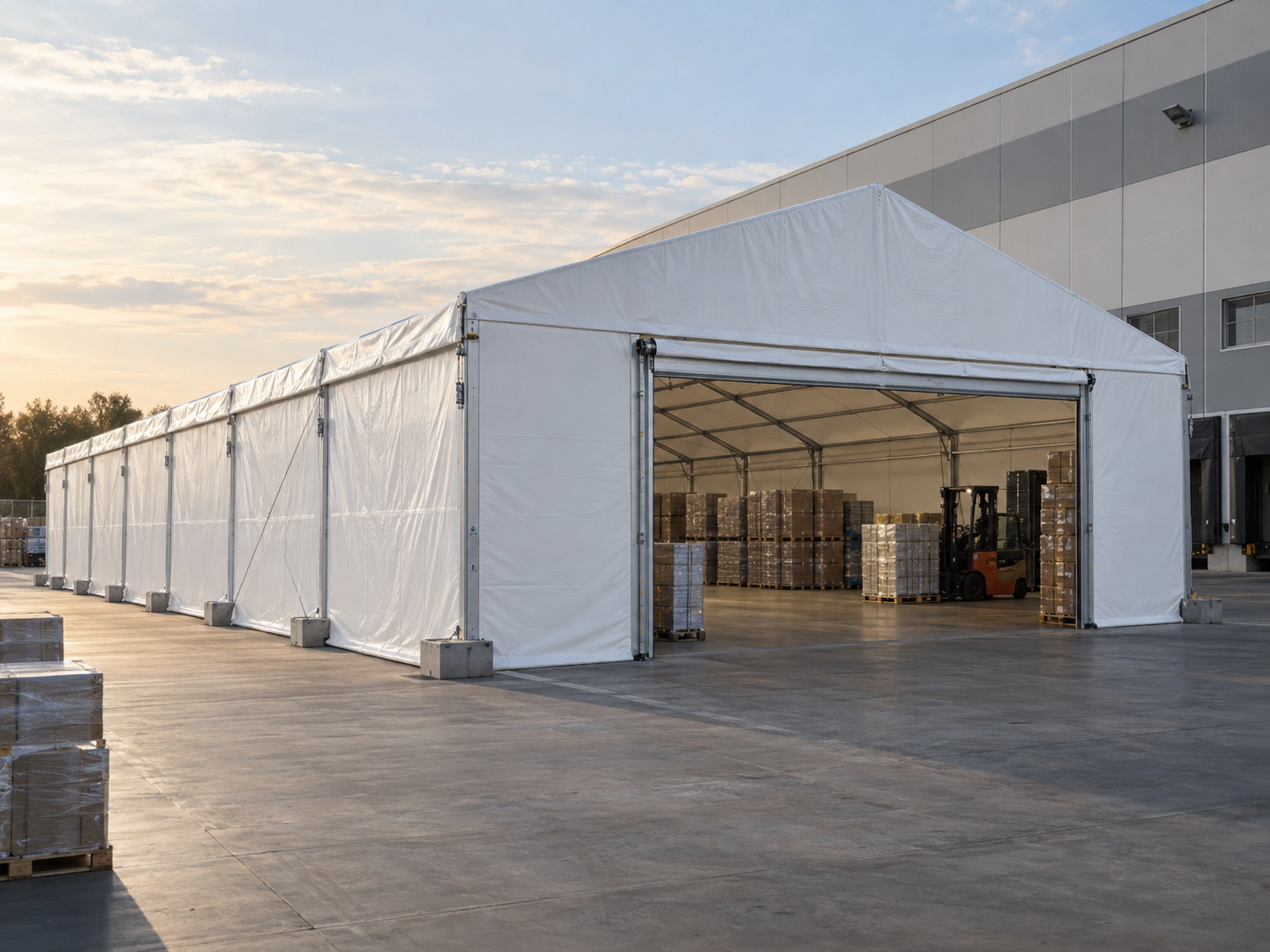
A buyer searching for a generator maintenance tent is usually solving an operating problem, not shopping for an empty roof. An enclosure can protect an open generator from rain, but a poorly planned one can trap exhaust, block radiator airflow, obstruct fuel controls or compromise the facility’s redundancy strategy. This guide is for data center operators, critical-facility teams, generator service contractors and MEP procurement managers. It explains how to convert the work into a measurable brief, how to divide responsibilities and how to inspect the supplied structure without inventing performance claims.
The related phrases data center generator shelter, temporary genset service enclosure, backup power maintenance canopy and generator overhaul tent describe different ways buyers frame the same decision. They are used naturally here rather than repeated as labels. Examples are planning scenarios, not claims about completed TentDawn customer projects. TentDawn's 8,000 m² Shenzhen factory is user-provided company information; any test or shipment evidence should be requested for the actual order.
Quick answer
Start with the generator maker’s service method, outage and redundancy plan, lifted-component envelope, exhaust and cooling-air paths, and fire or fuel controls. Use the tent only as an engineered weather interface. Keep combustion equipment outside occupied or enclosed space unless the responsible specialist has designed a compliant arrangement.
A useful purchase specification names the job, site, operating period, dimensions, interfaces, acceptance evidence and exclusions. It also states which decisions belong to the owner, local engineer, safety specialist, installer and equipment provider. That separation protects the buyer from a quote that appears complete only because essential work has been left unnamed. For the generator service bay, attach that responsibility map to the RFQ.
Buyer takeaways
- Define the work process and failure consequence before selecting tent dimensions.
- Survey generator package, radiator airflow, exhaust, fuel system, load-bank cables, cranes, service trucks, temporary lighting and facility security in their real operating positions.
- Record site wind, snow, ground, drainage, access and approval inputs.
- Compare complete installed scopes, not shell prices or marketing labels.
- Approve drawings, material references and inspection criteria before production.
- Test the finished arrangement under representative use before handover.
Define the operating requirement
Begin with the job, not the tent catalogue
List inspection, load-bank connection, fluid service, alternator or engine work, radiator removal and major lifts separately. The necessary enclosure configuration may change between tasks. Sequence temporary power, isolation, weather closure, service work, testing and restoration. Identify which standby unit remains available and what condition triggers immediate removal of the shelter. Write the operating sequence in plain language and mark the step that rain, heat, dust, wind or lack of space would interrupt. That step becomes the primary performance question for the enclosure.
State the expected duration, shifts, occupancy, movable equipment and future changes. Temporary does not mean undefined: a three-day intervention, a six-month project and a relocatable fleet demand different packing, maintenance and approval arrangements. If the use could change, list the alternative configuration and the person authorized to approve it. Set these limits explicitly for the generator service bay.
Map equipment and people interfaces
The layout must account for generator package, radiator airflow, exhaust, fuel system, load-bank cables, cranes, service trucks, temporary lighting and facility security. Size openings from the rigged component and lifting device. Removable panels can support major work, but they need an approved sequence and must not interfere with radiator airflow or emergency controls. Draw the actual movement path on the site plan and show the narrowest usable point. Outside dimensions are not clear internal dimensions, and a nominal door size is not necessarily the opening available after tracks, thresholds and deflection allowances.
Use one controlled drawing revision for the supplier, installer and operator. Mark zones for work, storage, vehicle or equipment movement, emergency access and utilities. A serious planning failure is routing generator exhaust toward the enclosure or a building air intake while doors are closed for rain protection. Treat that scenario as an acceptance test, with an owner and a measurable result.
Survey the site before requesting a final quote
Record geometry, access and ground conditions
Survey the generator yard, air intakes, exhaust discharge, fire lanes, security boundaries, underground services, drainage and routes for the heaviest component. Confirm space for anchors or ballast outside equipment clearances. Measure in consistent units and identify the source and date of every critical value. Photographs help explain context, but they do not replace levels, dimensions, utility records or a surveyed layout.
Include the route from public road or depot gate to the installation point. Check container or truck unloading, crane or lift positions, temporary laydown and the longest packaged member. A structure that fits the final footprint can still be impossible to deliver or erect if those temporary work zones are absent. Verify this delivery path for the generator service bay before release.
Capture environmental and operating conditions
Define stop-work weather, rain-protection level and any temperature limits in the generator service instructions. Treat exhaust and heat as source-control issues, not problems solved by adding a few vents. The buyer should not copy a wind speed, snow value or indoor condition from another project. Use the location, adopted rules, equipment instructions and competent specialists to set the design inputs.
Also document drainage, flood exposure, corrosion environment, direct sun, dust, noise and nearby operations. These inputs affect membranes, doors, ventilation, finishes, maintenance and the safe installation sequence. Unknown items should be listed as open decisions, not hidden behind the word “standard.” Rank these exposures for the generator service bay site survey.
Turn the requirement into a technical specification
Define structure and clear geometry
Show openings, removable bays, duct or cable interfaces and the site load basis on the structural drawings. Freestanding supports are preferable for service equipment unless frame loads are specifically designed. The approved drawing should state the dimensional reference points, door clear openings, frame layout and interfaces. If equipment can move or a panel can be removed, show both normal and temporary configurations.
Request the structural design basis and identify who verifies it for the destination. Local approval can require calculations, drawings, product documents and a foundation or anchoring review. Factory conformity evidence is useful, but it does not replace the authority having jurisdiction or a site-specific professional decision. Record the named reviewer in the generator service bay approval register.
Select an envelope for the actual process
Use weather closures that remain clear of hot exhaust, intakes and rotating equipment. Insulation can affect heat balance and should be selected only against a defined thermal objective. Define what the envelope must do: shed rain, reduce solar gain, limit infiltration, support cleaning or provide a controlled interface. Avoid words such as “all-weather,” “soundproof” or “climate-controlled” unless test conditions and acceptance limits are written down.
Specify flame-performance documents where required, heat separation, frame finish, membrane reference, doors, floor protection and components exposed to oil or cleaning agents. Samples and reports must match the offered product. Printing, windows, liners, coatings and replacement panels can change the relevant construction, so substitutions should trigger documented review before cutting or assembly.
Compare workable configuration options
Compare an open-sided maintenance canopy, a fully enclosed service tent and a staged removable-bay solution. Score exhaust safety, airflow, lift access, weather control, security and rapid demobilization. Include civil work, installation plant, utilities, operating labor, maintenance and demobilization in the comparison. A more elaborate system is justified only when its additional function is needed and verifiable.
Use the same site and operating assumptions for every bid. If one supplier excludes anchoring, doors or installation while another includes them, normalize the scope before comparing totals. Record unresolved items separately so procurement does not silently treat them as included. Normalize these exclusions in the generator service bay bid table.
Use evidence without blurring responsibilities
Put official guidance in context
Review CDC/NIOSH carbon monoxide workplace guidance and OSHA lockout/tagout program resources. CDC/NIOSH carbon monoxide workplace guidance provides context for combustion-engine exhaust and enclosed-space risk; OSHA lockout/tagout program resources provides context for hazardous-energy control during generator servicing. These references help the project team ask better questions; they do not approve a structure, method or workplace in every jurisdiction.
The project should identify applicable editions, local adoption and the competent reviewer. A tent manufacturer can provide product drawings, materials, calculations within its agreed scope and batch records. The owner and appointed specialists remain responsible for the site, regulated process, third-party equipment and operational controls unless the contract explicitly assigns otherwise. Keep that boundary visible in the generator service bay responsibility matrix.
Create a responsibility matrix
Assign one named party to structural verification, site preparation, anchors or ballast, utilities, specialist process design, fire and life safety, installation, inspection and final authorization. Separate shell, structural engineering, installation, temporary power, HVAC if any, fire protection, spill control and service equipment. The quote should never imply that the tent supplier certifies the generator maintenance method. Put exclusions beside the price so they cannot disappear between quotation and purchase order.
Change control matters after approval. A different door, frame profile, membrane, site or operating process can invalidate earlier assumptions. Require written review before a substitute enters production or a field crew modifies the structure. Route every change through the generator service bay approval log.
Compare suppliers and approve the order
Ask for comparable quotation evidence
A credible quote for generator maintenance tent should include the approved geometry, material schedule, structural assumptions, openings, accessories, packing method, production lead-time basis and inspection stages. It should also identify documents supplied before deposit, before production and before shipment.
Beware of undefined certificates, copied project photographs and claims that a single fabric test makes an entire installed structure compliant. Ask for the issuing body, specimen, standard, date and relationship to the offered material. For calculations, confirm the site inputs and drawing revision. Index accepted evidence in the generator service bay document register.
Use a staged approval process
A practical sequence is: requirement brief, site survey, budget configuration, design review, material or component sample, final drawing, production release, factory inspection, shipment release and site acceptance. Each gate should have a decision owner and a retained record. Use these gates in the generator service bay production schedule.
Where a detail is new or critical, approve a first article or mock-up. That may be a door bay, liner joint, service opening, floor transition or packing kit. Fixing an interface at the factory is usually easier than improvising after overseas delivery. Select the mock-up around the generator service bay critical interface.
Mid-article CTA
Planning a generator maintenance tent? Send TentDawn your site plan, operating brief, quantity and destination. Ask for a configuration proposal that separates supplied scope, project responsibilities and open technical decisions.
Factory testing and shipment inspection
Inspect against the approved revision
Trial the large removable panel, cable ports, door hardware and critical clear dimensions. Inspect heat-adjacent materials and labels against the approved bill, without representing a factory shell test as generator-system approval. An inspection checklist should name the tool, sample size, tolerance or pass criterion and evidence to retain. “Checked” is not a result unless the buyer can see what was checked and against which requirement.
In TentDawn's Shenzhen production setting, useful controls can include incoming-material identity, cutting records, weld or seam review, frame and connector checks, trial fit, label verification and packing reconciliation. The exact inspection plan belongs to the order; this article does not claim those checks have already been completed for an unspecified batch. Tailor the checklist to the generator service bay purchase specification.
Prepare for traceable delivery
Pack panels and frame bays by removal sequence so the site can create the required lift opening without searching through mixed hardware. Protect seals and clearly identify repair materials. Photograph package condition and labels at release. Give the consignee the packing list, drawing register, installation instructions, maintenance information and agreed reports in a version-controlled handover set.
At receipt, inspect visible damage before opening, reconcile package counts and quarantine damaged or wet items. Do not wait until the installation crew is mobilized to discover a missing door rail, connector or fastener kit.
Installation, commissioning and maintenance
Coordinate installation preparation
The critical-facility manager controls redundancy, isolation, fuel, fire, security and return-to-service decisions. The erection team follows the structural method and maintains all generator access and air paths. Confirm foundations or ballast, utilities, access equipment, tools, crew competence, weather forecast and emergency arrangements before unloading. Set hold points for the first frame, bracing, membrane tension, doors and final anchoring.
Never modify a structural member, omit a brace or add an equipment load because it appears convenient. Record field changes and obtain the required engineering or manufacturer review before continuing.
Test the completed operating arrangement
Before service begins, conduct an exhaust and airflow review with the generator specialist, then test lighting, cables, doors, rain paths and emergency removal. After maintenance, remove the shelter as required before the final operational test. Site acceptance should include photographs, measurements, open defects and responsible sign-off. A factory inspection proves conformity to an order; commissioning proves whether the installed interfaces work at this location.
Inspect restraints, membrane clearances, closures and any oil-contaminated surfaces during the job. For reusable kits, quarantine heat-damaged or contaminated parts and update the deployment record. Provide inspection frequency, severe-weather actions, cleaning, repair materials, spare parts and escalation criteria. Keep a serial or kit record so replacement parts correspond to the correct drawing and material revision.
Related TentDawn resources include data center equipment staging tent guide, industrial tent ventilation planning, commercial tent installation preparation checklist. Use them to develop the site, engineering and handover parts of the same procurement file.
Procurement worksheet
- State the primary operation and the consequence if the enclosure fails.
- List all equipment, loads, people and utilities crossing the tent boundary.
- Attach a dimensioned site plan with access and installation zones.
- Record location-specific weather, ground, drainage and corrosion inputs.
- Define clear openings and internal working envelopes at the worst case.
- Assign structural, safety, utility and process-design responsibilities.
- Approve materials, drawings, substitutions and document requirements.
- Write factory inspection and packing acceptance criteria.
- Plan installation hold points and representative commissioning tests.
- Retain handover, maintenance and change-control records for the life of the kit.
FAQ
Can a running generator operate inside the maintenance tent?
Combustion equipment can create lethal carbon monoxide and major heat or airflow hazards. Do not assume a tent is suitable for generator operation. The facility and qualified generator, fire and ventilation specialists must assess exhaust, intakes, clearances and operating state for the exact arrangement.
How should the enclosure support major lifts?
Show the rigged component, crane or hoist path and temporary panel-removal sequence on the approved plan. The tent frame must not be used as lifting support unless specifically designed. Reinstall and inspect removed structural or envelope parts before the configuration is relied upon again.
Who controls backup-power risk?
The data center or critical-facility operator controls redundancy, outage approval, temporary power, testing and return to service. A tent supplier can provide weather-enclosure drawings and installation information, but cannot authorize maintenance on critical generation systems.
What should be inspected at the factory?
Check approved geometry, removable bays, doors, cable ports, membrane and frame identity, labels, hardware counts and packing sequence. Site airflow, exhaust, fuel and electrical performance are commissioned with the responsible specialists after installation.
When should the shelter be removed?
Follow the approved service and test plan. The shelter may need removal or opening before a load test, engine run or full airflow test. Define that trigger before the outage and keep a rapid, safe demobilization method available.
Conclusion
A reliable generator maintenance tent starts with a defined operation, verified site inputs and honest responsibility boundaries. The best proposal is not the one with the most confident adjectives; it is the one whose geometry, materials, engineering basis, inspection evidence and exclusions can be checked. Complete a representative site acceptance test before relying on the enclosure in routine operations.
Final CTA
Ready to prepare a supplier-ready brief? Contact TentDawn with the use, dimensions, quantity, destination and target schedule. Request drawings, material options, batch inspection evidence and clearly stated exclusions.
START A PROJECT
Send us the basics.
We will reply with the right next questions for your custom tent requirement.