CUSTOM TENT BUYER GUIDE
Family Tent: Space, Comfort & Setup Guide
Choose family tent with practical advice on capacity, floor area, peak height, vestibules, weather protection, setup, packed size, and family use.
- Introduction
- Plan for people, gear, and weather
- Make first use smooth and repeatable
- Mid-article CTA
- FAQ
- Conclusion
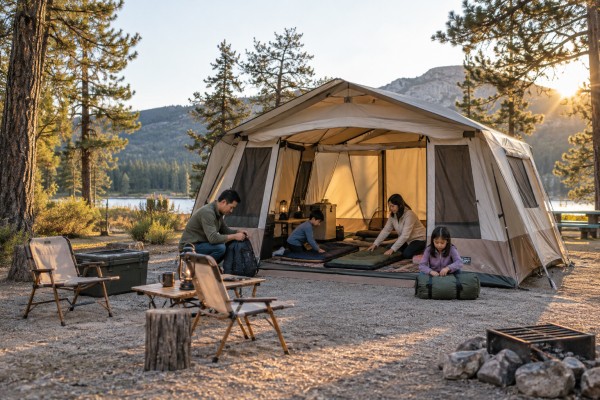
A family tent buying guide needs to work for the people and gear that will actually use it. Capacity labels are a useful starting point, but the more meaningful questions are floor space, sleeping-pad width, peak height, vestibule storage, door placement, ventilation, weather exposure, packed size, and how easily the tent can be used by the intended group.
The related searches—family tent for sale, family tent for beginners, family tent for rain, family tent easy setup—should be considered together. TentDawn uses the same practical checklist when reviewing a family camping brief or a distributor’s outdoor-tent product range.
Plan for people, gear, and weather
Measure usable rather than claimed space
Start with sleeping positions and the gear that must remain inside or protected under a vestibule. Allow for pads, bags, movement around sleepers, night-time exits, and wet-weather storage. Families often value a larger floor plan, extra doors, room dividers, and a peak height that makes changing clothes or supervising children less awkward. A tent that technically sleeps the stated number can still feel cramped if every person brings full camping gear.
Then assess where it will be used. A campsite in warm weather needs airflow and shade; regular rain calls for rainfly coverage, protected seams, suitable ground protection, and a site with good drainage; exposed conditions need correct staking and guying. Avoid relying on a single waterproof-rating number without looking at the complete tent design.
Compare construction and the complete kit
Check fabric composition and coating, floor fabric, seam treatment, pole material and diameter, connection design, mesh, zipper operation, vent placement, rainfly coverage, guy-out points, stakes, carry bag, footprint, and repair kit. Price differences can reflect frame strength, fabric weight, accessories, rain coverage, packing quality, or construction detail.
For product programs, factory testing can include a complete pitch, pole and fly fit, door and zipper function, component count, packaging review, and confirmation that the tent matches the approved sample. A shipment inspection should use the approved specification and packing list rather than a generic checklist.
TentDawn’s Shenzhen facility supports practical fabric, pole, assembly, and packing reviews for outdoor-tent orders. See TentDawn camping and family tent options and our factory capability for related sourcing information. For general camping preparation, the National Park Service camping guide provides a neutral starting point.
Make first use smooth and repeatable
Pitch before the trip
A first pitch at home or in a dry open space confirms the pole sequence, roof orientation, rainfly alignment, stake locations, guy lines, ventilation, and packing sequence. Check that all users can understand the manual and that the carrying plan suits the group. For a family trip, practise packing and assign components so setup is calmer at destination.
Dry the tent fully after each use, remove loose dirt, inspect seams and poles, and store it away from prolonged heat and moisture. This prevents mildew and reduces the chance that a small tear or damaged pole becomes a trip-ending failure.
Mid-article CTA
Building a family-tent range or custom outdoor order? Send TentDawn your capacity target, feature requirements, quantity, and destination for a practical configuration recommendation.
FAQ
How should buyers assess family tent capacity?
Check usable floor area, sleeping-pad layout, peak height, door positions, vestibule space, gear storage, and the number and size of actual users. Leave a comfort margin for family camping.
What makes a family tent suitable for rain?
Look for sufficient rainfly coverage, well-finished seams, a durable floor, protected vents, correct staking points, and an installation site that drains well.
Is it worth pitching a new tent before travel?
Yes. A first pitch identifies missing parts, unfamiliar pole routing, fit problems, and setup timing before the tent is needed in poor weather or late in the day.
How can a buyer check a bulk tent order?
Agree an approved sample and inspection criteria. Check materials, poles, tent dimensions, component count, labels, carry bags, instructions, cartons, and packing-list accuracy before shipment.
Conclusion
The right family tent gives the intended group enough usable space, weather protection, and setup confidence without adding unnecessary bulk. A complete review of layout, construction, accessories, and care is more useful than choosing by capacity label or price alone.
Final CTA
Need a family-tent specification that fits your market? Contact TentDawn for product details, a custom-order discussion, or an outdoor-tent catalogue.
START A PROJECT
Send us the basics.
We will reply with the right next questions for your custom tent requirement.