CUSTOM TENT BUYER GUIDE
Loading Dock Canopy Tent: Sourcing Guide for Covered Transfers
Evaluate loading dock canopy tent with a B2B process for configuration, quality checks, delivery, installation preparation, and lifecycle support.
- Introduction
- Build the requirement from the operating day
- Use a specification that suppliers can actually price
- Create quality gates before goods are packed
- Prepare the handover before shipment leaves
- Mid-article CTA
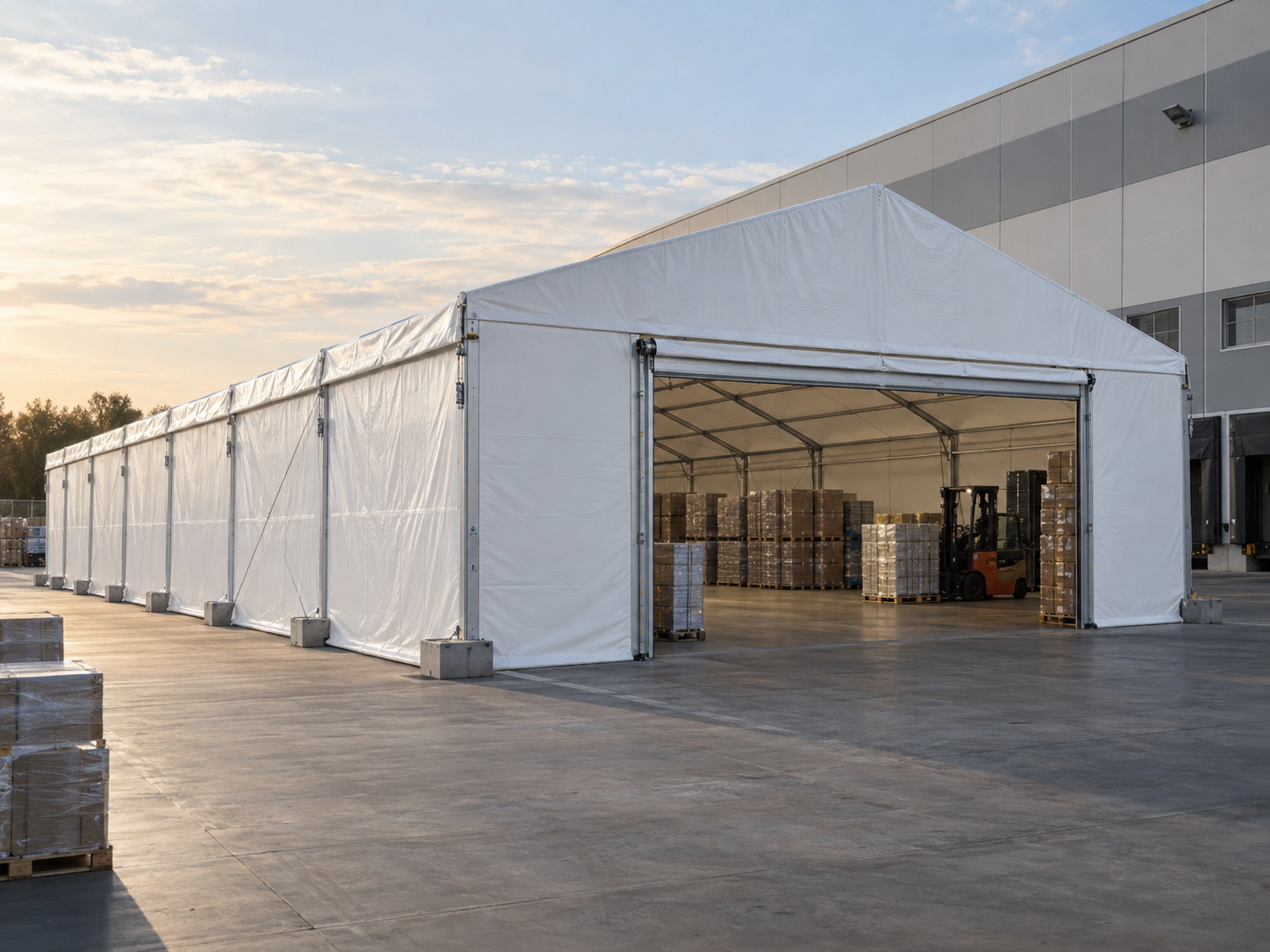
loading dock canopy tent is a commercial sourcing question, not merely a request for a product image. Buyers in this category are normally planning covering loading and unloading activity, protecting staged goods, and improving workflow at exposed transfer points. They need a package that can be specified, shipped, installed, operated, and supported with fewer assumptions. The useful decision is therefore not “which tent looks right?” but “which documented configuration will work at this location with this operating team?”
The phrases loading canopy manufacturer, warehouse loading shelter supplier, dock shelter tent price, and temporary loading canopy are closely connected. They signal that the buyer is evaluating supplier capability, product scope, price, and repeat-order potential at the same time. This guide explains how to convert those searches into a practical RFQ and a controlled order process. It is informational, not engineering or regulatory approval. Project owners should verify applicable local requirements with competent professionals.
Build the requirement from the operating day
Map people, goods, and movement
Start by mapping the work or visitor journey under the tent. For warehouse operators, logistics managers, distribution centres, construction teams, and industrial distributors, the use is covering loading and unloading activity, protecting staged goods, and improving workflow at exposed transfer points. List who arrives, which equipment enters, where staff work, what must remain dry or secure, and which movement paths cannot be blocked. This reveals the usable layout, not just an outside width and length. Include doors, emergency routes, service access, storage, work zones, furniture, signage, and any transition between the tent and a fixed building or vehicle.
Then define the operating cycle. Is the structure deployed once, moved weekly, used through a season, or left in place for a defined temporary period? Who will set it up, inspect it, clean it, and keep its parts together? These questions directly affect frame selection, bag design, labelling, repair parts, and the amount of installation documentation worth requesting.
Turn the site survey into specification inputs
A good site survey makes pricing more credible. Confirm dock doors, trailer paths, forklift routes, pedestrian separation, drainage, overhead services, ground capacity, and operating hours for installation. Note where trucks can stop, where components can be laid out, who controls the site, and whether there is a safe route for people during installation. If a tent must sit beside a building, vehicle route, public walkway, or service area, show those relationships on a simple plan.
Describe anticipated weather exposure honestly. Buyers should agree with the supplier on the intended operating conditions, anchoring assumptions, and response procedure when conditions change. A tent does not remove the need to monitor weather, follow local site policies, or close an operation when it is no longer safe to continue. Writing these boundaries into the brief is a professional safeguard for both parties.
Use a specification that suppliers can actually price
Make every physical element visible
For this application, the specification should identify clear height, projection, roof drainage, side coverage, frame placement, vehicle clearance, lighting interface, fabric, anchor layout, and maintenance access. Suppliers should list what is supplied, what is optional, and what requires local coordination. This is the only dependable way to compare quotation scope. Two products with the same quoted footprint may differ substantially in frame profile, fabric construction, doors, ventilation, anchor hardware, accessories, packing, manuals, and delivery responsibility.
Ask for a controlled drawing whenever the product includes custom dimensions, printed graphics, modified entry points, service openings, or an unusual layout. The drawing should distinguish a visual concept from a manufacturing instruction. Confirm the dimensions, opening direction, panel sequence, graphic area, and required clearances before releasing it to production.
Treat materials as serviceable components
Material selection should respond to the operating environment. Ask how the roof, walls, mesh, clear panels, pole or frame system, connections, zippers, and hardware perform their intended role. Review seam construction, reinforcements, water shedding, airflow, wear areas, cleaning limits, and the availability of replaceable components. If a requirement is important—such as a particular fabric surface, a door type, a colour, or a labelled accessory—it should be in the order documents rather than implied by a photo.
For a repeat programme, preserve approved samples, artwork files, measurements, bills of materials, and packing records. These are practical controls during reorder, repair, and customer-service work. They also give a factory team a reference for factory testing and reduce the risk that a later production run silently changes a component that matters to the buyer.
Create quality gates before goods are packed
Agree what a sample and inspection must prove
Before an order is released, agree which evidence is needed. Relevant controls include approved dimensions, material confirmation, frame and hardware check, fabric-panel inspection, accessory count, and packing verification. For a custom programme, sample approval should identify precisely what is accepted and what still needs correction. Use photos, measurements, signed artwork proofs, and a component checklist. A sample should be a decision point, not a vague indication that production can begin.
During bulk production, inspect incoming materials and then check fit, visible finish, printed graphics where applicable, closures, hardware, bags, labels, and cartons. The shipment inspection should use the same approved list. Count the tent components and accessories, verify shipping marks, and photograph the packed order. This approach gives the buyer a usable record if a shortage, transit issue, or later support request arises.
TentDawn’s 8,000 sq. m. Shenzhen factory supports component review, assembly preparation, factory testing, export packing, and shipment inspection. Review TentDawn product categories and factory processes when preparing your own inspection list.
Compare commercial offers beyond unit price
Ask suppliers to quote the same quantities, specification, trade term, destination, sample requirement, inspection scope, and accessory list. Break out changes that can affect the final figure: printing setup, packaging, special fabric, door or window changes, spare parts, delivery arrangements, and installation support. This makes a loading dock canopy tent price discussion more transparent.
The delivered cost includes more than the invoice. Consider installation preparation, unloading, site readiness, storage, cleaning, maintenance, repair, and the time lost if a small missing component stops a deployment. A transparent offer with all boundaries named is more useful than a low unit price that leaves essential work outside the stated scope.
Prepare the handover before shipment leaves
Align packaging with the receiving plan
The consignee needs package dimensions, weights, counts, and a clear unpacking order before the shipment arrives. Confirm that fabrics will be stored dry, that long frame sections can be moved safely, and that hardware packs are not separated from the instructions. When the installer is different from the buyer, send the approved drawing and packing list to both parties. It is better to identify a discrepancy in a warehouse or on a quiet setup day than at the point of use.
At arrival, photograph the outside of crates or cartons, note damage before unpacking, count packages, and compare the goods to the packing list. Complete a controlled installation or first setup. Verify the layout, connections, anchors, openings, accessory count, and site condition before public use or operational handover.
Keep records that support the product life
A simple handover record should include drawings, component and packing lists, inspection records, photos, setup instructions, care guidance, and a route for ordering replacement parts. Note movements, cleaning, weather events, repairs, and missing items. This protects a commercial asset and gives operators a reliable history for a warranty discussion or repeat purchase.
For general workplace planning context, see OSHA safety resources, then apply the local rules and competent advice relevant to the actual site. A linked reference can support a structured conversation, but it is never a substitute for a project-specific safety or approval review.
Mid-article CTA
Need help turning a loading dock canopy tent idea into a comparable RFQ? Send TentDawn your application, layout, expected quantity, and destination for a practical list of next questions.
RFQ questions buyers should answer
- What must happen under the tent, and what usable clear space is required?
- Which site constraints affect anchors, drainage, access, delivery, installation, and operations?
- What frame, fabric, closures, branding, accessories, packing, and documentation are required?
- What sample, approval, factory testing, and shipment inspection evidence will the buyer accept?
- Which trade term, destination, delivery date, receiving plan, and spare-part arrangement apply?
With these answers, a loading dock canopy tent quotation becomes a real project document instead of a headline price with hidden assumptions.
FAQ
What should a loading dock canopy tent buyer include in an initial enquiry?
State the application, site, timeline, usable layout, weather exposure, ground condition, quantity, destination, and any branding, accessory, packing, or documentation requirements. A basic drawing and photographs make the response more specific.
How can warehouse loading shelter supplier offers be compared fairly?
Use one approved scope. Compare the frame, fabric, doors or walls, anchors, accessories, bags or cartons, inspection, transport boundary, and installation responsibilities—not only the stated tent size or unit price.
When should a buyer request a sample?
Request one when materials, artwork, dimensions, packing, or an operational feature is important to the decision. Define the acceptance criteria before the sample is made.
What is the purpose of pre-shipment inspection?
It checks that the finished order matches the approved specification before dispatch. The process typically reviews visible condition, components, accessories, labels, packaging, quantities, and shipping marks.
Can the same tent be used at different locations?
Possibly, but review each location for ground conditions, access, weather exposure, layout, local rules, and operating pattern. A consistent core product may require site-specific accessories or anchoring.
Turn the selection into a controlled project decision
Separate non-negotiable requirements from preferences
Before accepting a loading dock canopy tent quotation, identify the items that cannot change without affecting the operation. These may include usable space, access, the agreed fabric and frame system, critical openings, packed handling limits, a required delivery date, or specific acceptance evidence. Put those items in the controlled specification. Other choices—such as optional panels, finish upgrades, additional branding, or a larger spare-part allowance—can be shown as priced options. This distinction prevents a team from treating a desirable feature as an assumed inclusion, then finding that it was not part of the approved order.
A practical decision meeting should include the person responsible for procurement, the site or operations representative, and the person who will receive or install the goods. Review the drawing, quotation, component list, delivery term, and inspection checklist together. If a requirement is unclear, resolve it before production, not while the shipment is in transit or during a time-critical setup.
Assign ownership for each handover point
Clear ownership is as important as a good product. The buyer should own accurate site information, local approvals, the receiving plan, and timely artwork or drawing approvals. The supplier should own the stated manufacturing scope, approved materials, packing list, and inspection evidence. The installer or site team should own safe assembly, ground and anchor verification, local tools, and the operating checks required before use. When these responsibilities are named, a Loading Dock Canopy Tent: Sourcing Guide for Covered Transfers project is less likely to stall because every party assumed another party would complete a small but essential task.
For repeat programs, turn the first delivery into a reference build. Record which choices worked, which accessories were actually used, how long setup took, and which parts were requested after handover. That experience supports a more accurate reorder and gives the team evidence for refining quantities, packing, documentation, or spare-part planning.
Conclusion
A disciplined loading dock canopy tent purchase links the operational need to a documented specification, a comparable quotation, controlled sample approval, factory testing, shipment inspection, and practical handover. Those steps make the project easier to install and support, while giving the buyer clear evidence of what was ordered and delivered.
Final CTA
Ready to discuss a loading dock canopy tent project? Contact TentDawn for a catalogue, custom configuration discussion, or quotation review.
More buyer guides
Measure the actual vehicle and load with the forklift-access tent door sizing worksheet.
START A PROJECT
Send us the basics.
We will reply with the right next questions for your custom tent requirement.