CUSTOM TENT BUYER GUIDE
Outdoor Festival Tent Weather Contingency Planning for Organizers
Plan festival tent layouts for changing weather with practical questions about access, drainage, staffing, site checks and local safety responsibilities.
- Introduction
- 1. Make weather part of the event brief
- 2. Plan wet-weather movement
- 3. Keep the site team informed
- Mid-article CTA
- FAQ
Outdoor events are exposed to changing conditions even when the forecast looks favourable. A tent can provide useful cover, but it is not a substitute for a weather-monitoring, crowd-management and emergency plan. Organizers should align the temporary structure with the site, event schedule, contractor responsibilities and local authority requirements.
The earlier this planning happens, the more useful the tent layout becomes. Access, drainage, doors, sidewalls, service zones and guest routes should be based on the real event operation, not just on the desired footprint.
1. Make weather part of the event brief
State the dates, site location, expected attendance, operating hours and seasonal conditions. Identify which activities must continue in rain, wind or heat and which can be paused. Map exposed queues, catering, power, stage equipment, first aid and evacuation routes.
Do not ask a supplier for an undefined guarantee against every weather event. Instead, ask what conditions and configuration assumptions apply to the supplied structure and what local approvals, monitoring and decisions remain with the organizer. This makes the conversation more useful and more responsible.
2. Plan wet-weather movement
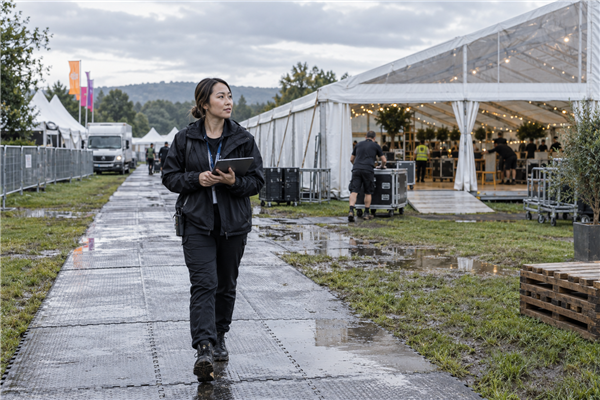
Rain affects more than the roof. It changes entry queues, grass condition, access roads, vehicle delivery, cable routes and the space around tent doors. Review ground fall, existing drains, hardstanding, temporary flooring and paths to amenities. Provide a dry, accessible route where the public or staff must move frequently.
During installation preparation, agree where materials will be stored, how vehicles reach the site and who has authority to delay work if conditions make the site unsuitable. Keep the tent perimeter clear so drainage and inspection remain possible.
3. Keep the site team informed
Assign named roles for weather monitoring, communications, structural checks and decisions to suspend or alter activities. The tent installer, venue manager, organizer and local safety team need a shared escalation path. After any significant weather, inspect the site, surrounding ground, drainage and visible structure before reopening affected areas.
For a multi-day event, log observations rather than relying on informal handovers. This supports clearer decisions and captures lessons for future events.
Mid-article CTA
Building an event weather plan around a tent layout? Send TentDawn your dates, site and activity plan for a practical structure and access discussion.
FAQ
Can a tent supplier create our complete event emergency plan?
No. The organizer and responsible local parties must manage the event plan, staffing and approvals. A manufacturer can clarify supplied structure information and configuration.
What should we photograph before the tent arrives?
Capture access roads, ground, drainage, overhead obstacles, intended entrances, service zones and nearby buildings or trees.
When should a tent site be rechecked?
Follow the project’s operating plan and local guidance, especially after significant weather or any change to the structure, ground or activity.
Conclusion
Weather contingency is strongest when it is integrated into the event layout. Define operational priorities, plan wet-weather routes, assign decisions and keep the site observable. That makes a tented event more manageable without making unrealistic promises.
Final CTA
Start your festival tent brief with the site conditions. Contact TentDawn to discuss layout and access.
Related specialized guides
For operational follow-through, see the festival back-of-house tent guide and commercial tent snow load planning guide.
START A PROJECT
Send us the basics.
We will reply with the right next questions for your custom tent requirement.