CUSTOM TENT BUYER GUIDE
Parking Lot Tent Guide: Temporary Cover for Vehicle Operations
Plan a parking lot tent around vehicle lanes, surface condition, drainage, clearance, access and operating workflow.
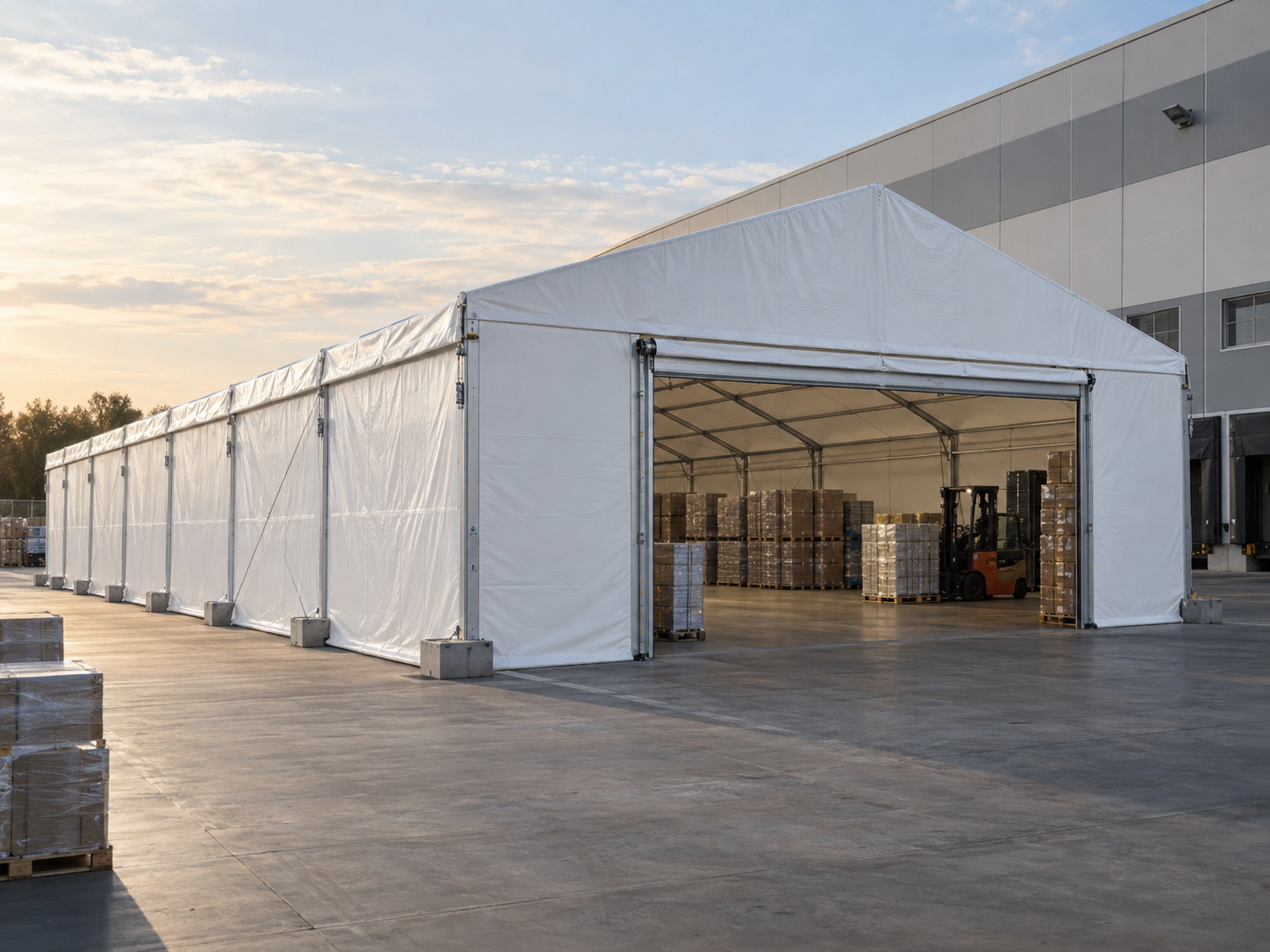
- Introduction
- 1. Map lanes, clearances and stopping positions
- 2. Inspect pavement and water movement
- 3. Define the daily operating rules
- Mid-article CTA
- FAQ
A parking lot tent may support vehicle inspection, protected queuing, temporary collection, fleet operations or an event check-in area. Because the tent sits inside a vehicle environment, the first design task is to protect vehicle routes and working space rather than to fill the available paved area.
1. Map lanes, clearances and stopping positions
Put vehicle approaches, turning areas, pedestrian crossings, working bays and exits on one drawing. Include actual vehicle dimensions and any door-opening space. A clear-span tent can create flexible cover, but it cannot resolve a layout where cars and pedestrians are forced through the same constrained route.
2. Inspect pavement and water movement
Record paving condition, slopes, drains, kerbs, utility covers and nearby traffic. These details help the team discuss anchoring options, base protection and site preparation. For a wider project review, see how to inspect a tent site.
3. Define the daily operating rules
Set responsibility for vehicle movement, traffic control, cleaning, temporary services and inspection of the covered area. Local site approvals and safety planning must be handled by the responsible operator and relevant professionals.
Mid-article CTA
Need covered space in a vehicle area? Send TentDawn your lane plan and site photographs.
FAQ
What is a parking lot tent used for?
Common uses include vehicle handover, inspection, covered queueing, fleet staging and short-term event operations.
Can a tent be installed on paving?
The answer depends on the site, surface, anchoring approach and local constraints. Supply photographs and a site plan for project review.
What should be checked before installation?
Check access, vehicle paths, overhead items, drainage, pavement condition, utilities and installation timing.
For general workplace safety resources, consult OSHA and apply the responsible operator's local site requirements.
Conclusion
Parking lot tent projects are successful when vehicle movement and site condition are documented before the structure is specified. This reduces operational surprises after installation.
Final CTA
Discuss your temporary vehicle-cover project. Contact TentDawn with the site brief.
START A PROJECT
Send us the basics.
We will reply with the right next questions for your custom tent requirement.