CUSTOM TENT BUYER GUIDE
PVC Tent Fabric Guide: How to Compare Roof, Wall and Clear Panels for Commercial Use
Compare PVC tent roofs, walls and clear panels for commercial applications. Learn which material questions to ask before approving a tent specification.
- Introduction
- 1. Separate the roof, wall and clear-panel decisions
- 2. Ask for the stated material specification and samples
- 3. Plan for daylight, privacy and operations together
- Mid-article CTA
- 4. Include maintenance and packing in the purchase decision
Commercial tent fabric is selected for more than colour. Roof and wall materials influence daylight, privacy, visual presentation, cleaning, thermal comfort, door integration, branding and the documentation a project may require. A buyer who asks only for “heavy-duty PVC” may still receive a proposal that does not match the intended environment or use.
This guide helps buyers prepare a material brief for events, hospitality, temporary storage and branded structures. It does not claim that one fabric is suitable for every climate or regulatory market. Confirm the final configuration, documents and local requirements with the relevant parties.
1. Separate the roof, wall and clear-panel decisions
The roof protects the primary footprint, so it should be considered with roof shape, span, support system, drainage and internal use. Walls influence privacy, airflow, access and weather protection at the perimeter. Clear panels change daylight and view but can also change solar comfort and cleaning expectations. A project may sensibly combine different materials across these zones.
Describe what the tent needs to achieve: a bright event interior, a secure storage boundary, a brand-facing façade, a ventilated work area or a transparent connection to a venue. The answer guides the material conversation better than a colour name alone.
2. Ask for the stated material specification and samples
Request the material description, available colours, sample swatches where appropriate, seam/connection approach, cleaning guidance and documents available for your destination. If the project needs a particular flame-related, blackout, translucent, transparent, insulated or printed solution, write that requirement into the RFQ rather than adding it after drawing approval.
Samples are useful for tactile finish, colour, translucency and print appearance. They do not replace reviewing the full tent configuration. A small clear sample can look excellent on a desk but behave differently as a large wall or roof zone in direct sun.
3. Plan for daylight, privacy and operations together
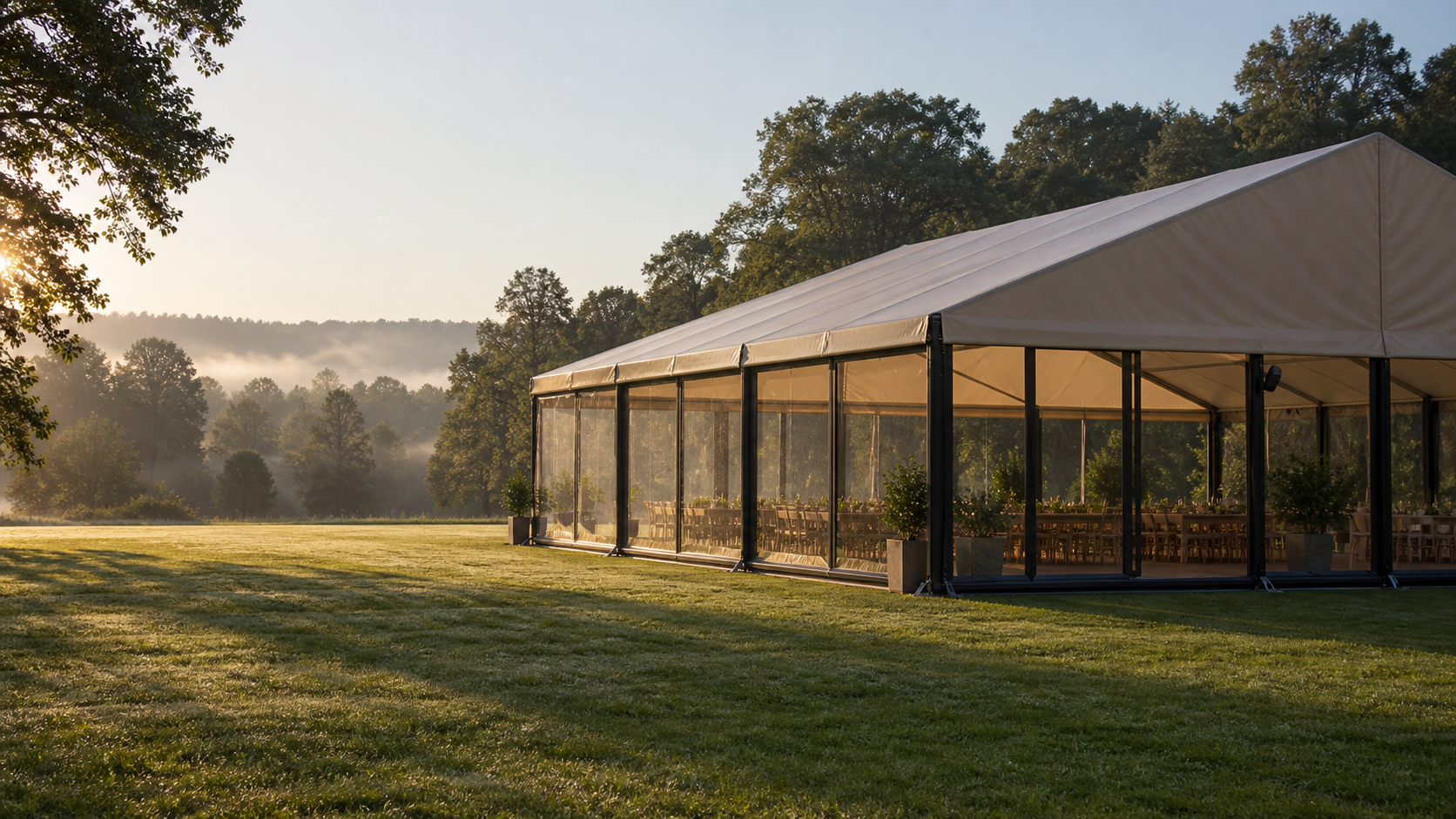
Transparent walls can create an open hospitality setting and help a venue connect with its landscape. Solid walls can support privacy, screening and product storage. Windowed panels may balance daylight with enclosure. The right choice depends on orientation, interior activity, door placement, cleaning access and the desired customer experience.
For warehouses and temporary operations, prioritise access, visibility, internal lighting and the way doors will be used. For an event, consider guest sightlines, catering/service areas, photography and whether glare or heat could affect comfort. Record the desired wall by elevation rather than saying “some clear walls.”
Mid-article CTA
Need help translating the visual brief into a tent specification? Send TentDawn your application and wall/roof preferences. We will help identify the material and configuration questions for a quotation.
4. Include maintenance and packing in the purchase decision
Fabric needs careful handling during packing, unloading, erection and storage. Ask how membranes are labelled, protected from abrasion, cleaned and dried before long-term storage. Clarify whether a replacement panel can be identified from the approved drawing and order record. This is especially important for rental fleets, repeat events and structures with custom printing or unusual wall arrangements.
At factory inspection, confirm that the order’s fabric packages, accessories and labels align with the approved specification and packing list. A shipment inspection is not a substitute for a final visual review at installation, but it makes receiving more organised.
FAQ
Is clear PVC suitable for every project?
No. It should be chosen for the actual application, orientation, comfort goals, cleaning plan and local requirements. Ask for a sample and discuss its position in the structure.
Can a supplier match a custom colour?
Availability, minimum quantities, printing method, lead time and final colour reference should be confirmed before production. Use an agreed physical or recognised colour reference where possible.
What fabric records should I request?
Request the material information and documents relevant to your project and market, then confirm any local compliance or authority requirements separately.
Conclusion
The best PVC tent fabric choice comes from a clear operational brief: what the roof, wall or clear panel needs to do, where it sits, how it will be used and what documentation the project requires. Make material selection visible on the drawing and packing plan before production begins.
Final CTA
Specify tent fabric with the full project in mind. Contact TentDawn for a roof, wall and accessory discussion.
START A PROJECT
Send us the basics.
We will reply with the right next questions for your custom tent requirement.