CUSTOM TENT BUYER GUIDE
Outdoor Manufacturing Tent Guide: Planning Temporary Production Cover
Plan a temporary outdoor manufacturing tent around process zones, materials, vehicle access, services and site responsibilities.
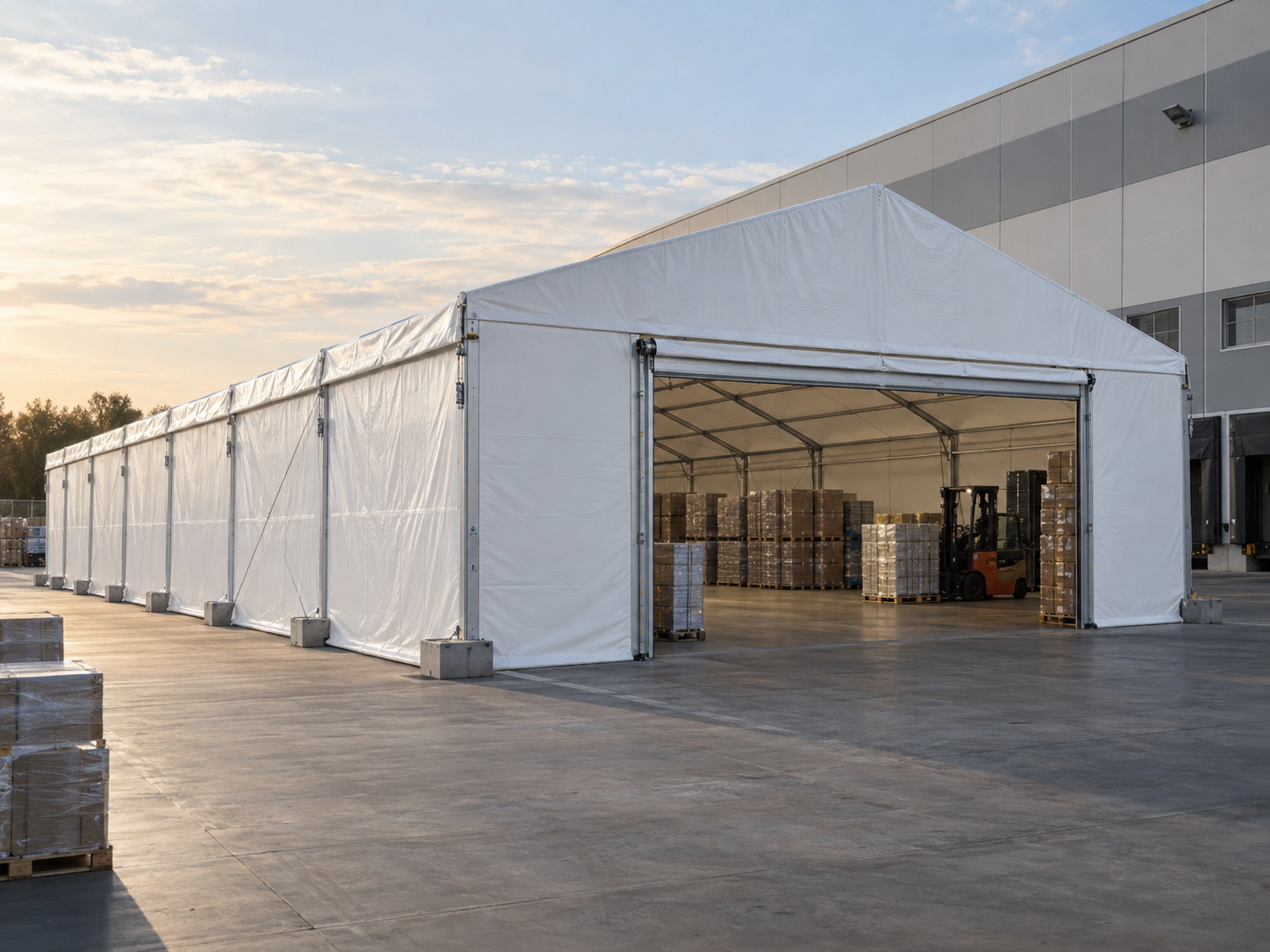
- Introduction
- 1. Map the process before choosing the footprint
- 2. Review site logistics and surfaces
- 3. Set clear technical ownership
- Mid-article CTA
- FAQ
Temporary manufacturing cover can help create space for assembly, staging or process support while a facility changes. The tent itself is only one part of the decision. The manufacturing team needs to define the process boundary, material movement, services, cleanliness needs and conditions that must be controlled by the operating site.
1. Map the process before choosing the footprint
Show incoming materials, workstations, finished-goods staging, staff routes, forklifts and waste flow. Ask which tasks can happen in a temporary environment and which must remain inside a permanent controlled area. This avoids placing a tent around an undefined process that later requires unsuitable services or interfaces.
2. Review site logistics and surfaces
Record ground condition, loading routes, openings, drainage, nearby doors and limits on installation timing. For a detailed storage-oriented comparison, see temporary warehouse tent solutions. A manufacturing use case may need more separation between people, material handling and production activity.
3. Set clear technical ownership
TentDawn can discuss frame, cover, layout and product information. The operating company and relevant qualified local specialists should determine process safety, electrical work, ventilation, environmental controls, permissions and safe work procedures for the specific installation.
Mid-article CTA
Evaluating temporary production space? Send TentDawn your process flow and site plan.
FAQ
What can an outdoor manufacturing tent be used for?
Potential uses include assembly support, materials staging, protected work areas and temporary process expansion, subject to site and operational review.
What should be in the initial brief?
Include process flow, footprint, equipment and vehicle movements, utilities, duration, site photos and required openings.
Who is responsible for production safety?
The operating company must coordinate its process and site responsibilities with appropriate local specialists.
For general workplace safety resources, consult OSHA together with the operating site's local procedures.
Conclusion
Temporary manufacturing cover works best when the structure is specified around a real process map and a clearly assigned operational scope.
Final CTA
Discuss your temporary manufacturing-space brief. Contact TentDawn to start the review.
START A PROJECT
Send us the basics.
We will reply with the right next questions for your custom tent requirement.