Command and coordination
Organize communications, staff workstations, briefings, equipment and controlled access.
EMERGENCY RESPONSE SOLUTIONS
Define command, screening, treatment-support, equipment or crew spaces with clear kit identity and deployment preparation.
APPLICATION-LED SOURCING
A response tent is useful only when the receiving team can identify, transport, erect and operate the complete kit. The brief should define users, zones, privacy, ventilation, equipment, power interfaces, cleaning, package identity and the skill level of the deployment team. Medical or hazardous operations require specialist systems and qualified oversight beyond the tent shell.
WHERE IT FITS
Organize communications, staff workstations, briefings, equipment and controlled access.
Plan queue, privacy, staff protection, records and separate entry and exit flow.
Provide rest, changing, storage or briefing space away from active operational zones.
Keep selected response equipment organized and sheltered with clear inventory control.
PURCHASING FRAMEWORK
The tent shell, operating equipment and specialist systems should have clear responsibility boundaries.
PREPARE A STRONGER RFQ
Send the use, dimensions, quantity, destination and required date. We will identify the next technical and commercial questions.
Send Your RequirementsA CONTROLLED PROJECT PATH
Define users, tasks, zones, equipment and specialist-service boundaries.
Approve structure, walls, doors, partitions, accessories, package identity and documentation.
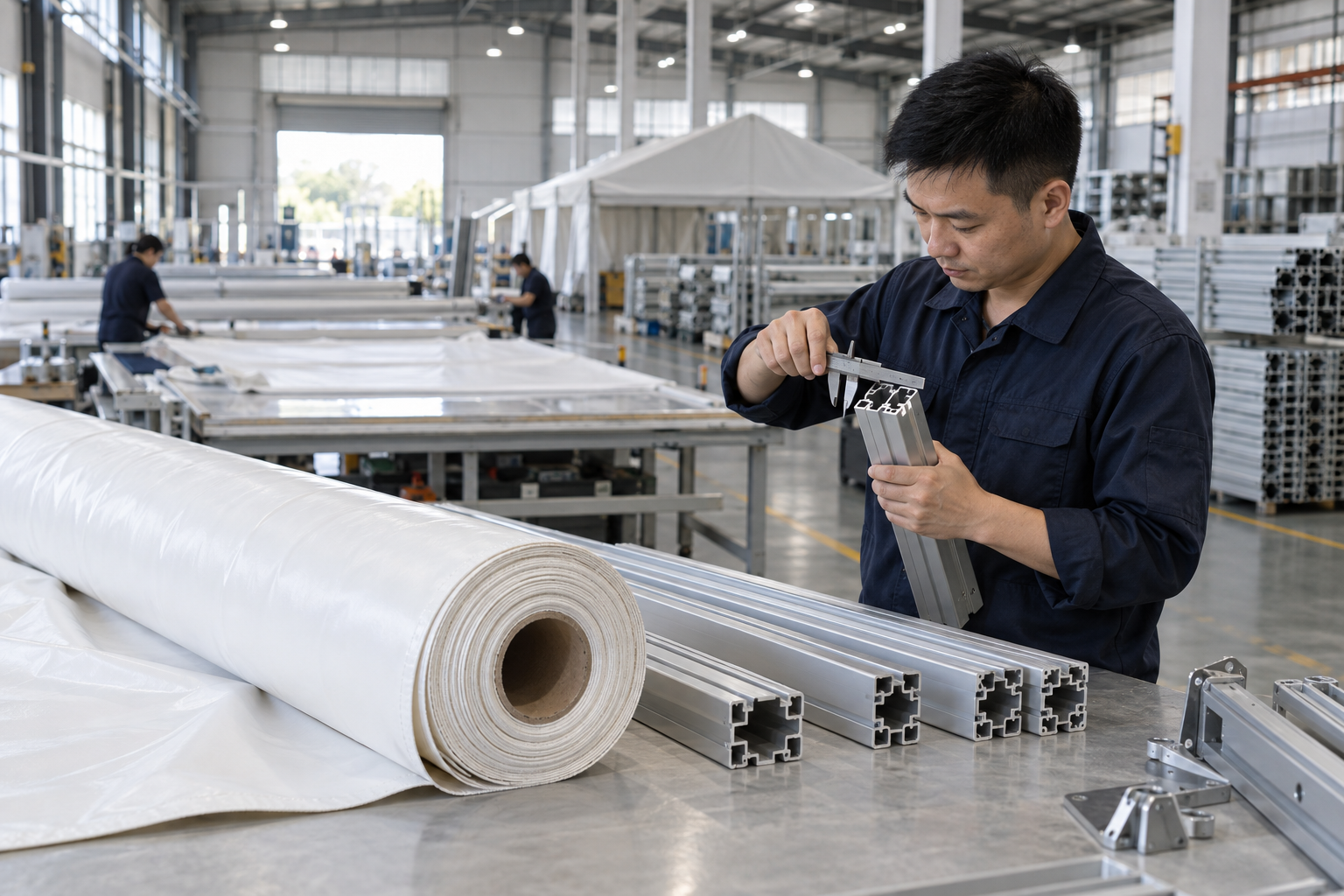
Inspect components and conduct representative setup or fit checks where agreed.
Store, inspect, drill, replace consumables and record changes throughout the service life.
FACTORY & PROCUREMENT EVIDENCE
Clinical, decontamination, fire, hazardous-material and other regulated functions require qualified design and equipment. The supplied tent scope and all specialist-system responsibilities must be explicit.
BUYER QUESTIONS
A familiar structure, trained crew, complete kit, clear package identity, accessible hardware and practiced sequence are more dependable than a headline setup-time claim.
A tent shell alone does not create a compliant medical environment. Clinical use requires specialist planning for hygiene, airflow, utilities, equipment, waste, safety and local health requirements.
Store them in the documented environmental conditions, keep packages identifiable and accessible, inspect on a schedule and replace damaged or expired supporting items before the kit returns to readiness.
Confirm package count, component identity, visible condition, hardware, accessories, labels, documents and any agreed representative assembly or function checks.
START A PROJECT
Share the intended users, zones, quantity, transport method, setup team, destination and readiness schedule.