Inventory overflow
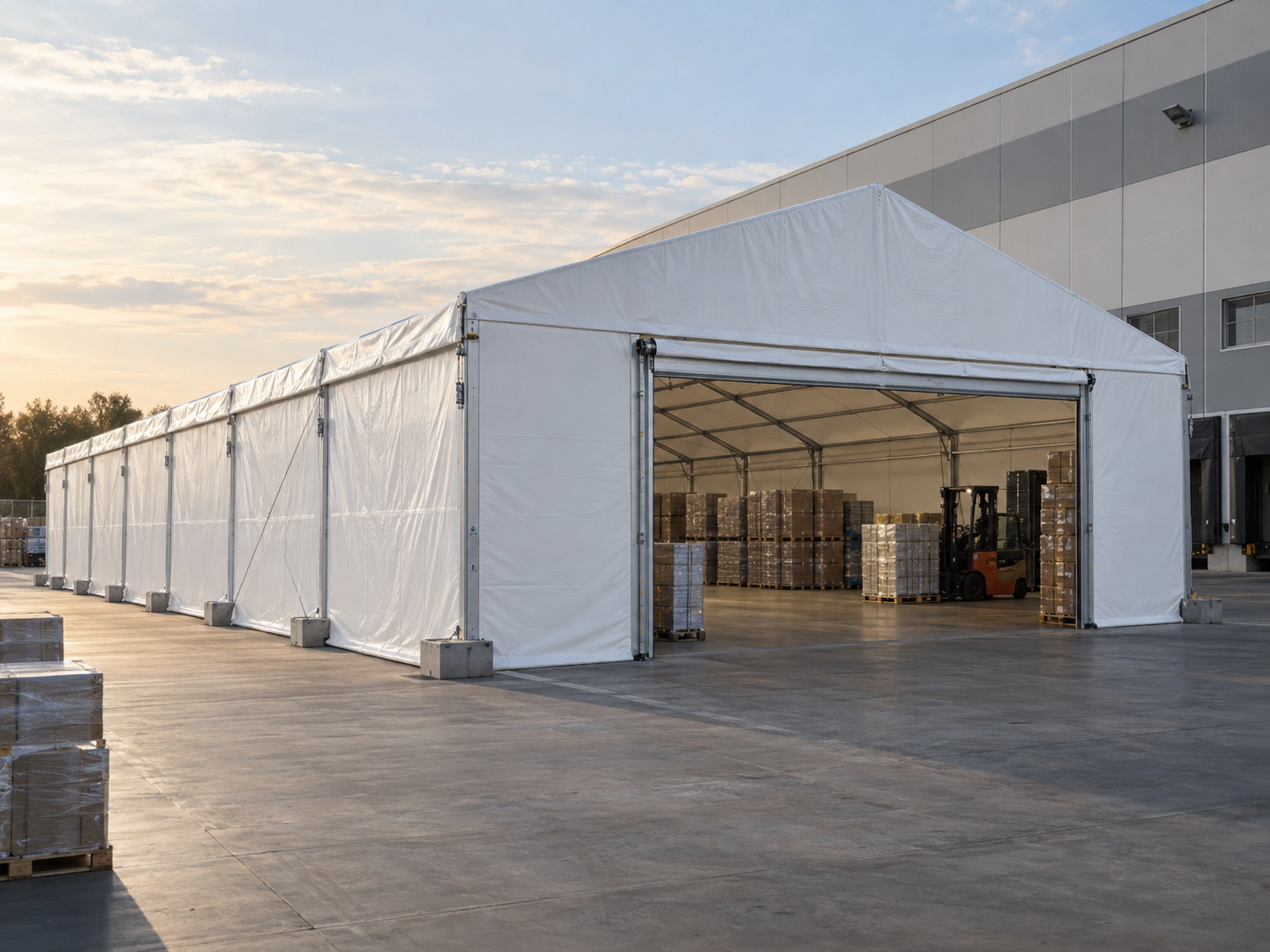
Place seasonal or campaign stock close to the main warehouse and dispatch workflow.
INDUSTRIAL STORAGE SOLUTIONS
Organize seasonal storage, loading, maintenance or production overflow around real goods, equipment, vehicles and site constraints.
APPLICATION-LED SOURCING
A temporary tent can create useful capacity near an existing facility, but only when the brief reflects daily movement and risk. Buyers should describe what enters, where it goes, who works inside, which environmental limits matter and how long the space will operate.
WHERE IT FITS
Place seasonal or campaign stock close to the main warehouse and dispatch workflow.
Reduce weather exposure during transfer without blocking dock, trailer or forklift movement.
Provide clear working volume around vehicles, tools, lifting plans and service access.
Create a defined area for staging, assembly, rework or equipment protection.
PURCHASING FRAMEWORK
Share the workflow and restrictions that the structure must support every day.
PREPARE A STRONGER RFQ
Send the use, dimensions, quantity, destination and required date. We will identify the next technical and commercial questions.
Send Your RequirementsA CONTROLLED PROJECT PATH
Quantify goods, equipment, activity, timing and service-level impact.
Confirm footprint, access, ground, drainage, traffic and installation window.
Align clear volume, doors, walls, ventilation interfaces and internal services.
Coordinate approvals, installation, inspection, maintenance and eventual removal or relocation.
FACTORY & PROCUREMENT EVIDENCE
Assign responsibility for inspections, weather monitoring, access control, maintenance, fire planning and any change in stored goods or activity after installation.
BUYER QUESTIONS
Connections may be possible, but levels, drainage, movement joints, fire separation, doors and responsibility boundaries require project-specific coordination.
Only after the required environment and risk controls are defined. Goods needing tight temperature, humidity, hygiene, security or fire control may require specialist systems or another building solution.
Lead time depends on configuration, engineering or approvals, material availability, quantity, production, shipping and site readiness. Share the required operating date early.
Installation scope varies by project. The contract should identify the responsible installer, supervision, equipment, site work, inspections and acceptance documents.
START A PROJECT
Send the required footprint, height, door clearance, stored goods, vehicle plan, surface and operating period.