Modular expansion
Select bay and component logic that supports common event footprints and future additions.
FOR TENT RENTAL COMPANIES
Plan commercial tent systems that crews can identify, transport, install, maintain and replenish across an active rental operation.
APPLICATION-LED SOURCING
A rental structure must perform as part of a fleet. Component compatibility, package identity, crew handling, wall and door options, inspection routines and access to replacement parts affect lifetime value as much as the initial purchase price. A stable specification makes expansion and replenishment easier to control.
WHERE IT FITS
Select bay and component logic that supports common event footprints and future additions.
Review package size, component weight, identification and installation sequence with operating teams.
Control profiles, connections, walls, doors and hardware through stable item references.
Plan inspection points, wear parts, fabric repair and replacement stock before the first deployment.
PURCHASING FRAMEWORK
A controlled fleet specification reduces uncertainty when components return from different events.
PREPARE A STRONGER RFQ
Send the use, dimensions, quantity, destination and required date. We will identify the next technical and commercial questions.
Send Your RequirementsA CONTROLLED PROJECT PATH
Map common event sizes, lost opportunities, setup constraints and existing inventory.
Choose modular sizes, enclosure options and component compatibility around the fleet plan.
Define bundle, bag, crate and label references for warehouse and crew use.
Create inspection, repair, spare-parts and reorder procedures before commercial deployment.
FACTORY & PROCUREMENT EVIDENCE
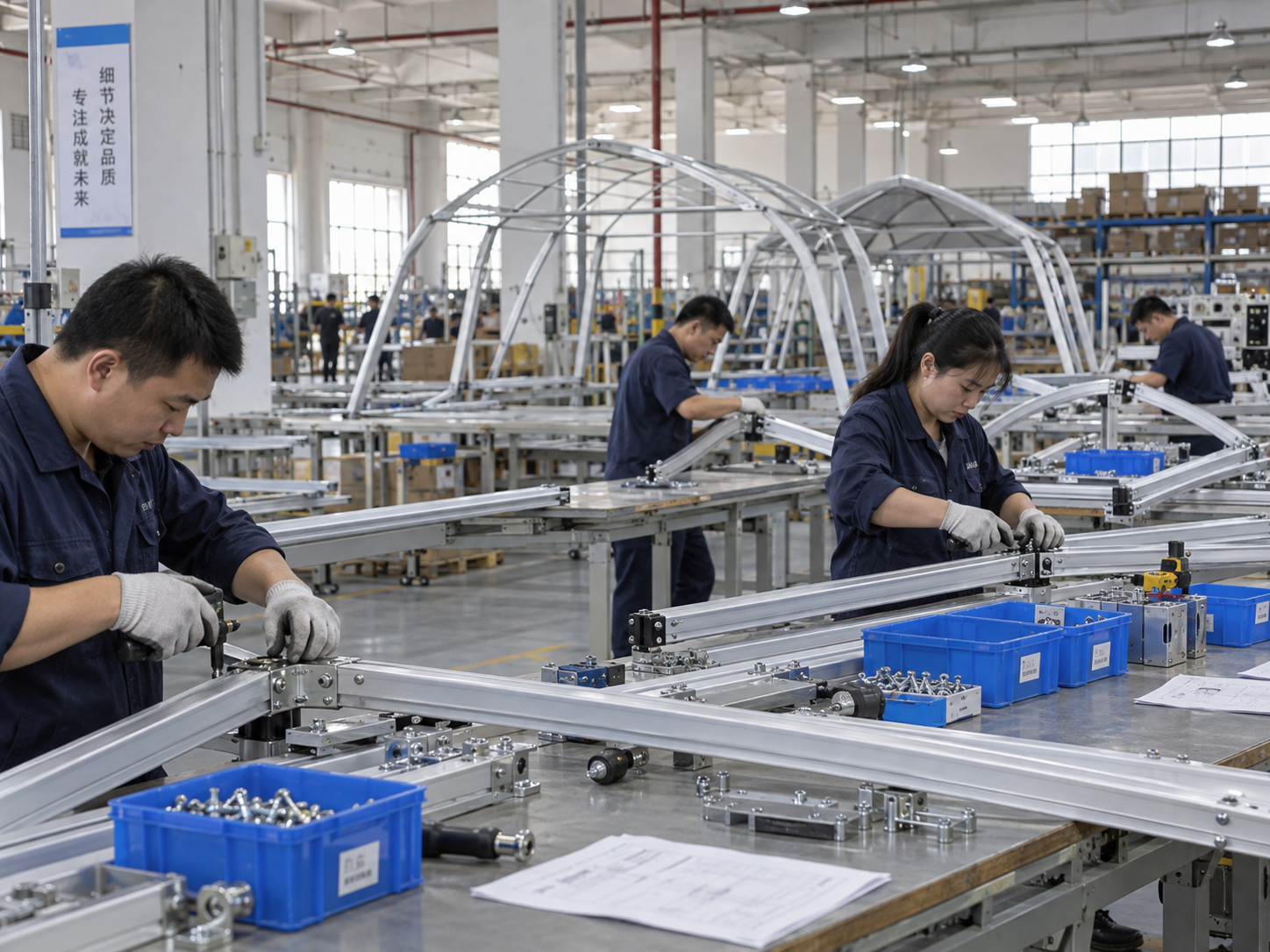
Do not assume that visually similar components are interchangeable. Approve named profiles, connections, dimensions, hardware and revision references for every fleet expansion order.
BUYER QUESTIONS
Start with the most frequent profitable layouts, available crews, transport, storage and local project requirements. Choose a modular range that covers recurring demand without creating excessive special components.
Potential compatibility must be checked against drawings, dimensions, profiles, connections and hardware. A physical reference or measured component schedule may be needed before any compatibility is confirmed.
Use the system risk and deployment frequency to select connectors, fasteners, wear components, wall attachments, repair materials and other parts that can stop an installation if missing.
Packing should support counting, transport protection, warehouse storage and installation sequence. Label every bundle or bag so crews can connect it to the correct structure and bay.
START A PROJECT
Include spans, bay modules, component references, deployment frequency and the inventory gaps you want to solve.